



In the mid-20th century, nuclear fallout from bomb testing in Nevada spread across several western states, including Idaho.
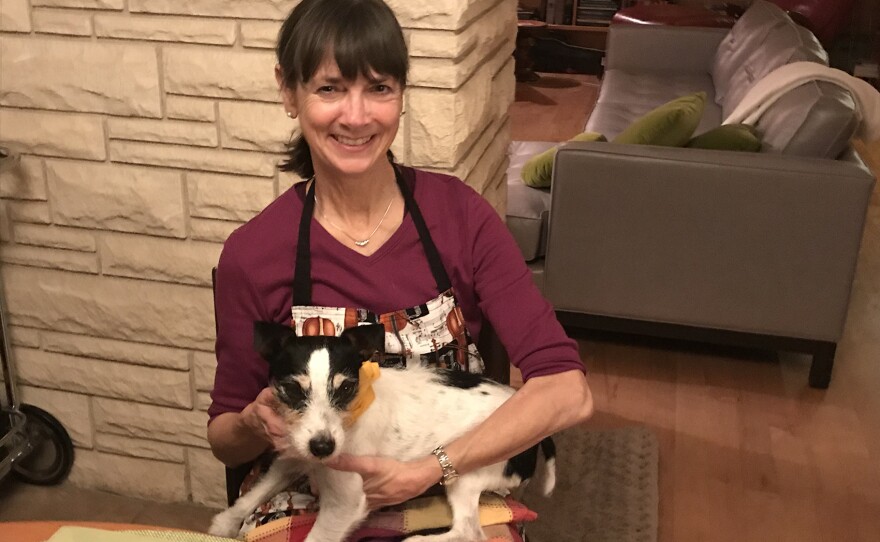
Tona Henderson grew up in Emmett, Idaho, located in Idaho’s Gem County. It was one of five counties in the country estimated to have had the highest levels of iodine 131 contamination. The others were Custer, Blaine, and Lemhi counties in Idaho, and Montana’s Meagher County.
“ My mom had breast cancer. My older brother had three bouts of cancer within an eight month period,” she said.
Henderson first learned about Idaho’s exposure to nuclear fallout in 2004. An article in the local newspaper connected her with Sheri Garmon.
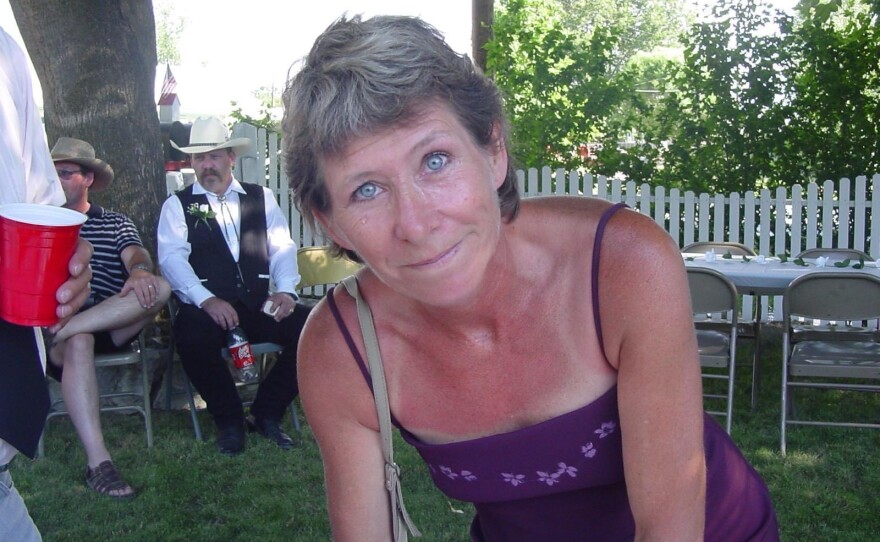
Garmon also grew up in Emmett. As a child, she drank milk from her family’s farm, where cows grazed in pastures she learned years later had been contaminated. Garmon was later diagnosed with thyroid cancer, which then metastasized.
Garmon spent her last year alive fighting for Idaho downwinders to be compensated, Henderson said.
The federal government started the Radiation Exposure Compensation Act in 1990, which expanded over the years to include more downwinders. But Idaho hadn’t been included. Garmon died in 2005.
“ I promised her I wouldn't give up on it ‘till Idaho was included,” Henderson said.
Compensation years later
Twenty years after Garmon’s death, Idahoans are getting that recognition. This year’s congressional budget includes a one-time payment of $100,000 for downwinders who lived in the states affected by nuclear fallout between 1951 and 1962, and who suffered one of 19 types of cancer.
The legislation also includes New Mexico, and Utah, and some parts of Arizona and Nevada. It allows family members, including a spouse, child, parent or grandchild, to file on behalf of an affected person. So far, about 400 total claims have been approved.
Filers are not required to use a lawyer to help fill out their application. Henderson said much of the work, which includes providing evidence of residency during the specified timeframe, as well as a cancer diagnosis, needs to be done by the individual or their family due to the sensitive nature of the information.
Some public services, including state and city archives, libraries, and the state’s Cancer Data Registry may be able to provide information to help people filing claims.
Exactly how many people were affected by fallout is hard to say — and there’s no way to know how many cancer cases would have developed if residents weren’t exposed.
Henderson, whose family owned a donut shop, said she also began tracking people in the community whom she knew had cancer years ago.
“ In 2004, I started writing down people's names that I knew,” she said. “When we sold the donut shop in 2019, I had almost 1,200 people.”
Henderson said she’s also held informational meetings on how to apply for RECA in her hometown, which drew between 100 and 200 people.
Many downwinders say they aren’t the only ones in their family who are eligible.
Family stories
Sandy Cross grew up in Emmett. Now a resident of Baker City, Oregon, the 79-year-old was diagnosed with lung cancer in 2023. One of her sisters was diagnosed with colon cancer. Cross also has a daughter who is too young to qualify for the compensation, she said, but has been fighting cancer since 2017.
Cross also lost loved ones. An aunt died of a brain tumor in 1969, and a different sister died of lung cancer in 2003. Her father died of a brain tumor in 2009. In July, she lost a brother, who had cancer in his pancreas, lung and liver.
Cross said she’s glad what her family went through is being acknowledged. But money can’t begin to cover the emotional toll of watching loved ones suffer from cancer, she said.
“It just continually hurts,” she said. “I pray that nobody would have to go through with (even) one family member.”
Mary McFarland was born in Twin Falls, Idaho. She was diagnosed with Stage 3 breast cancer in 2007. Her father died of esophageal cancer roughly 20 years ago, she said.
“I'll guarantee my cancer costs more than what I'm getting,” she said. “But it's certainly welcome.”
McFarland was an infant when the nuclear tests were conducted.
“With cancer — once you hear those words, your life changes forever. And unfortunately, it's always on your mind. Everything that goes wrong with your body, right?” she said. “My dad didn't have to die. His mom, maybe, didn't have to die at 55 years old.”
Sixty-five-year-old Teresa White was born in Caldwell. She is a lifelong Idahoan whose father’s family farmed in Emmett. She was diagnosed with breast cancer and lost both her grandfather and father to colon cancer.
Her husband, who grew up south of Boise, was diagnosed with colon cancer at 42 years old. He has multiple family members who have had cancer, including a mother who died of brain cancer.
“When Mike got cancer that early, it was a real shocker. And then when I got breast cancer … I
didn't have any family history of breast cancer. I'm like, ‘Where did this come from?’” she said.
Eileen Crawford was born in Boise. Four of the women in her family were diagnosed with breast cancer, she said. Crawford pursued genetic testing in 2012, but that test came back negative.
Ruth Pierce, who grew up in Idaho Falls, was diagnosed with breast cancer in 2006, and qualifies for compensation along with her brother, who had thyroid and bladder cancer.
Mary Alice Glen, 67, was born and raised in Boise. She was diagnosed with breast cancer in 1991, and her mother died of ovarian cancer a decade prior. She has a sister who was diagnosed with breast cancer, and a niece who was diagnosed with lymphoma at the same time.
“What was really awful just a couple days ago (was) reading my mother's records,” Glen said. “How much suffering she had that I didn't know about.”
Like many Idahoans interviewed, Glen said getting the compensation is bittersweet. Given the option, she’d choose not to have cancer. But the money will be life-changing for members of her family.
Henderson said her work isn’t done. She’s still working with other downwinders in Guam, as well as parts of Nevada, Arizona, Montana, Colorado, and some cities within Ohio to try and get compensation.
“It's a small win,” she said. “But it's not over with.”
Henderson said she plans to hold more training sessions for those interested in filing claims across the state. Those interested in learning more can contact her directly at [email protected].
