
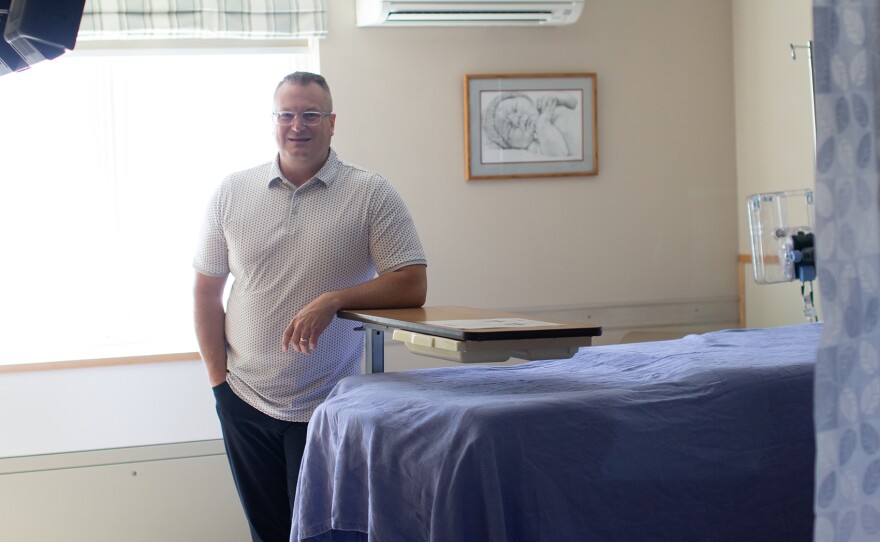




In the next few years, Dr. Matt Told will get to watch babies he delivered graduate high school. He’s been there for the beginning, and the end, of many lives in Grangeville, Idaho.
“I've had a lot of friends here that — I've watched them live their life. And they've now passed on. It's been special to be a part of that transition,” he said.
Zachary Told, one of his two adult sons pursuing medicine, remembers growing up seeing grateful patients approach his dad at grocery stores and restaurants.
“Whatever they were going through,” he said, “it could've been the best or worst day of their life, and they were just really happy that my dad was there.”
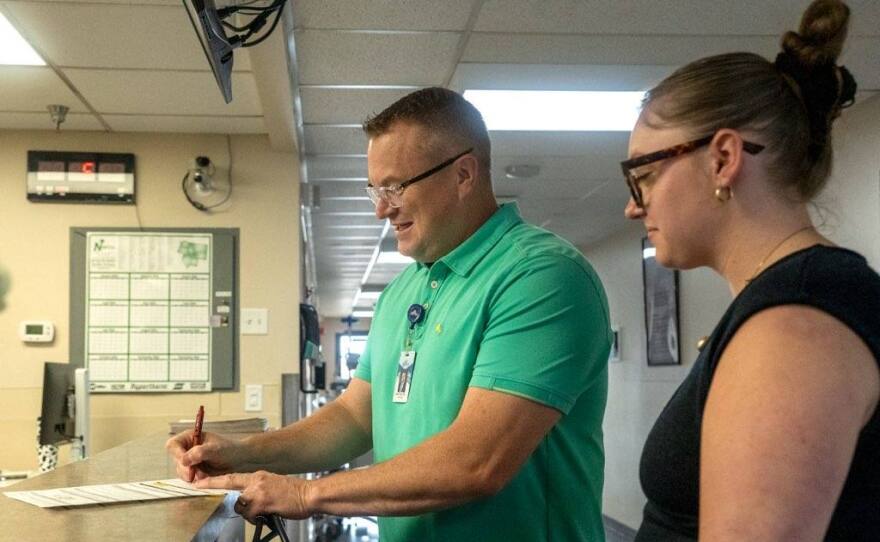
At Syringa Hospital and Clinics, where Told works as an attending physician, a typical workday starts with making rounds in the emergency room. Before his interview for this story, he had just finished ordering X-rays for a man with back pain.
“Then after that, I come down to the clinic. We see patients, and on certain days I'm on call as well,” he said. “In between seeing patients in the clinic, I run back and forth to the emergency room.”
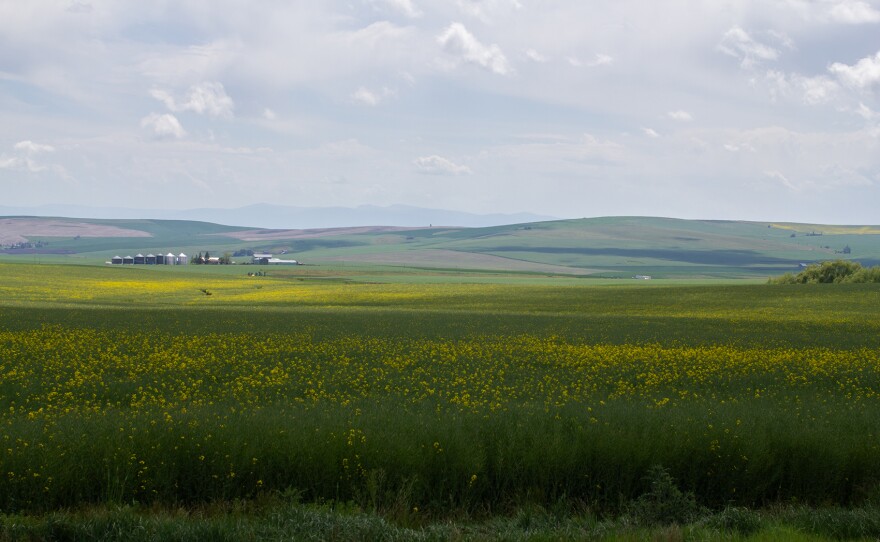
In towns like Grangeville, family medicine physicians like Told play a linchpin role for patients who are unable or unwilling to travel to larger cities for care.
“They won't take the time to travel the 75 miles it takes to get down to a specialist,” Told said. “So, you have to do a lot of research.”
But the number of rural family medicine doctors is dwindling. A 2025 study found an 11% year-over-year nationwide decrease in the rural family physician workforce.
What’s a small-town doc to do? If you’re Told, you teach the next generation.
Mentorship
This year, Told was one of two physicians in the country to be named a Master Preceptor by the American College of Osteopathic Family Physicians. It honors educators who go above and beyond helping students learn with hands-on training and guidance.
Told works with a new student about every month. He’s done it for five of the last 15 years he’s been in Grangeville.
He tries to make sure they get plenty of chances to learn practical skills, he said, like inserting catheters or filling syringes.
There’s also the human side. Knowing what it’s like to hold a new baby and place it on its mother’s chest; what it’s like to be present with someone who’s dying; how to help someone through a vaccination or blood draw.
“Actually touching the patient, encouraging them that, ‘Hey, this is gonna hurt a little bit, but this is for your benefit,’” Told said. “It's teaching them how to basically function with all of the knowledge that they have. To put it into application and not come off looking silly.”
Bri Vanderheyden, a resident physician at Abbott Northwestern Hospital in Minneapolis, Minnesota, said she came into medical school with a strong interest in obstetrics. Roughly 45 minutes after arriving in Grangeville, she got a text from her new mentor.
“He essentially said, ‘Hey, I have a patient who's nine centimeters dilated right now. Do you want to come and deliver the baby?’" Vanderheyden said. “I think it really just speaks to him and his investment in teaching, but also the kind of trust that he has with his patients.”
In addition to delivering babies, a noncomprehensive list of skills students have learned under Told includes suturing lacerations, putting in chest tubes, driving colonoscopy scopes, and treating trauma patients.
Students described Told as “the most patient individual,” and someone they saw as a friend, a “servant-leader” always happy to answer questions, and a person they could talk to about life.
Former student Samantha Hiller, a family medicine resident in Casper, Wyoming, said she’s trying to develop the kinds of relationships with her patients that she saw Told demonstrate.
“I don't want to be this person that someone comes and sees on a Tuesday and then that's all they know about me,” she said. “I wanna be (like) Dr. Told when I grow up, because he is really this cornerstone of his community.”
Vanderheyden said during her rotation in Idaho, she struggled with being away from her family. Told went so far as to invite her to his family’s Thanksgiving.
“You can tell he really cares about people,” she said. “It made a huge difference for me at a point in time where I could've felt really isolated.”
A love for people and service
Told fell in love with rural healthcare watching his father, Dr. Thomas Told, serving patients in Craig, Colorado. Told’s father never turned away a patient, he said, even when those patients showed up at the family’s doorstep complaining of back pain.
“They could barely stand up, and he would put them on a hay bale, and we'd adjust their back and neck,” he said. “And they'd feel better.”
Told has known for a long time that rural healthcare was for him, he said. He loves the natural beauty, and how he was still able to go to his son’s football games when they were growing up. He loves being a part of people’s lives, and being able to adapt to patient needs quickly.
He smiles a bit when he says that, sometimes patients in Grangeville will complain about wait times at the ER if it takes longer than 10 minutes.
“If only they knew,” Told said, recalling his residency training years ago. “ I went off a shift at 6 o'clock and the patient was laying in the bed. We had just gotten their vitals and all that. Came back on shift at six in the morning, and they were still laying in the bed in the hallway.”
Medicine has changed from when Told started. For one thing, he said, he now spends more time on the phone with insurance companies negotiating prior authorizations.
Some other challenges have stayed the same. Rural healthcare can require ingenuity, he said, and a whole lot of penny-pinching.
“We don't always have access to the big medicines. We don't always have access to the latest name-brand devices out there,” he said. “You have to be really good at trying to figure out stuff. You go read, you research, you call a specialist and ask them for help.”
Vanderheyden, who knew early on she wanted to work in urban underserved healthcare, said she had initially been skeptical of what she could learn in rural Idaho.
What she found, Vanderheyden said, was that there were more commonalities than she thought — from food insecurity to reluctance around medical care.
“I have several patients in my own clinic that, for their own reasons, have hesitancies around some standard recommendations,” she said. “It's something that I saw him kindly and compassionately address with people. And that is something I definitely have taken with me.”
Told’s other son who’s pursuing medicine, Michael Told, said he thinks the thing that makes his dad a great physician isn’t just his medical expertise.
“He treats his patients the same way that he treats his family,” Michael Told said. “With love and respect.”
Read the audio transcript here.
