
Listen
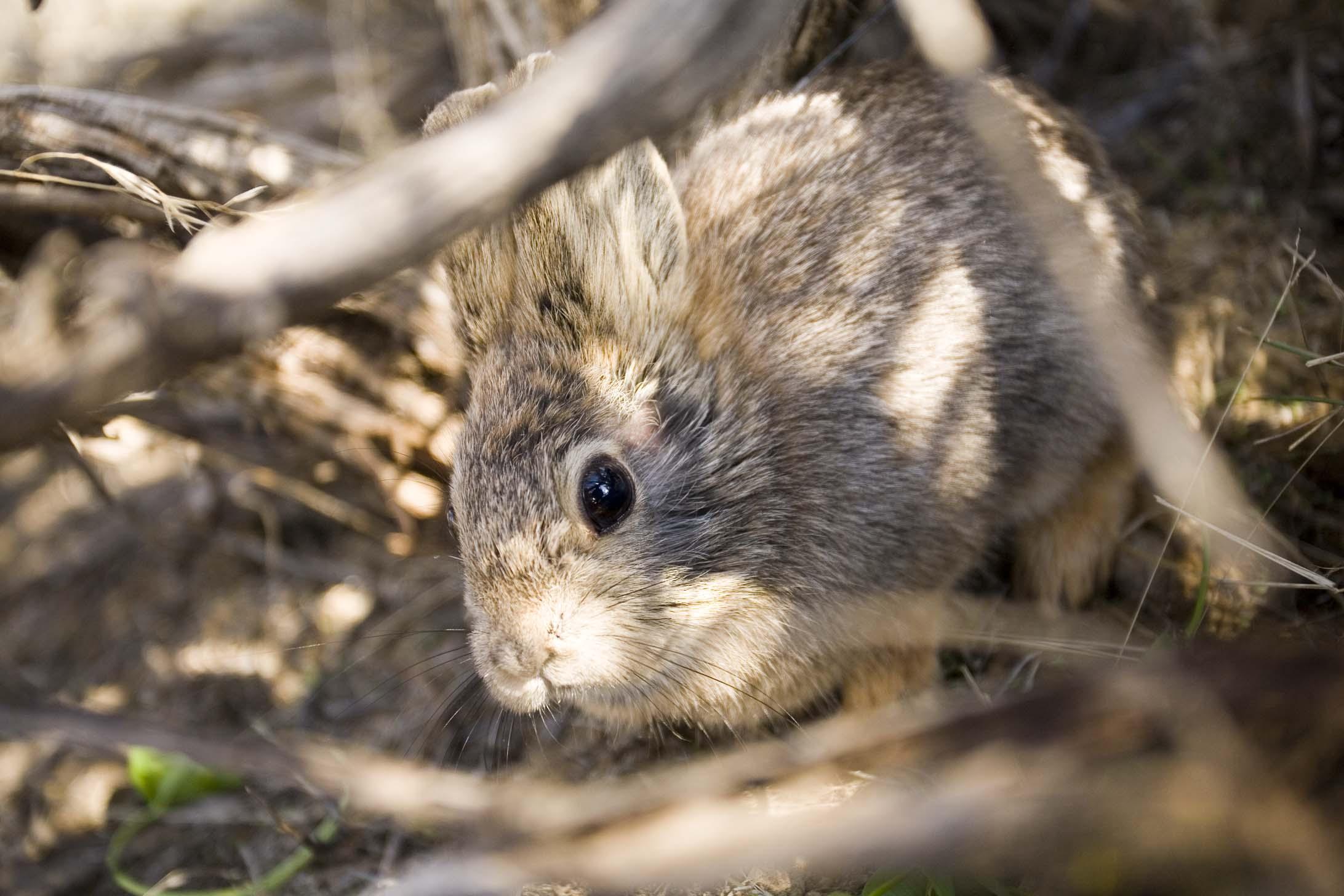
Rabbits are supposed to breed like, well, you know. But that’s not what’s happening to Washington’s pygmy rabbits. The state’s palm-sized rabbits are endangered. And for more than a decade, the state’s pygmy rabbits have struggled to come back from the brink of extinction. Recently biologists tried to kick-start a second population. But those rabbits are missing.
Pygmy rabbits have a hard time of it in the wild. They’re tiny. And they’re prey for badgers, hawks, coyotes, weasels — just about every hungry animal that calls sagebrush home.
That’s one reason biologists created a “pygmy rabbit hatchery” of sorts outside Ephrata, in Central Washington. There, they breed rabbits and release the young.
About 100 adult pygmy rabbits live outside the breeding grounds at Sagebrush Flats.

So far it’s been pretty successful. But today’s story takes place at Breezley Hills, where the outlook isn’t so sunny.
“We released 460 young in these hills last year. And we have yet to find a single one. So where did our 460 young go? That’s our job today,” said John Gallie, a biologist with the Washington Department of Fish and Wildlife.
Biologists searched for days this winter — when it’s easier to spot pygmy rabbit tracks. They flew over the area in a helicopter. Still nothing.
Now, volunteers with The Nature Conservancy are searching for any evidence of pygmy rabbits.
“What we’re aiming for is finding their burrow systems, which are pretty distinct,” Gallie said.
The fist-sized holes are buried underneath mounds of sagebrush. It was a hot summer day hiking up and down hills searching for burrows. Most of the time volunteers found badger holes or very old rabbit burrows from long ago — now homes for black widow spiders.
“I am not seeing anything. The structure is what we’re looking for but I’m not seeing any evidence [of recent rabbits],” Gallie said.
One possible problem for the rabbits: Last year’s drought. Most animals in the area took a hit last year: sage grouse, upland game species, waterfowl, but it’s especially hard on pygmy rabbits because there aren’t many of them to begin with.
Biologists desperately hope to find even one rabbit. They need more than one group of pygmy rabbits in the state.
“One lightning strike and we lose everything we have,” Gallie said.
With lightning could come fire a devastating fire. Disease could also wipe out the rabbits. That makes the search for surviving pygmy rabbits in Breezley Hills pretty important.
“If we find anything we’ll essentially document the second population of this species in existence,” Gallie said.
Finally, at the very end of the first day of searching, on the edge of the search range, biologists found one inactive burrow, probably dug out by last year’s crop.
“We have an intact burrow. Multiple entrances. And right down here is where we have all the piles of scat,” Gallie pointed at one entrance.
And on the second day, they found one active burrow, which was even better than biologists had hoped for: good news for building a pygmy rabbit population in Breezley Hills.
Next, biologists can refine their searches. And maybe one day release more pygmy rabbits here.
Copyright 2016 NWPB
Related Stories:

‘A Lot More Work To Do’ To Recover Snake River Chinook, Steelhead
A Chinook salmon. Listen One of Idaho’s struggling salmon species could eventually become self-sustaining in the wild under the federal government’s new recovery strategies. The Read More » Courtney Flatt December 13, 2017
Oil Train Safety Rules Getting Rolled Back By Trump Administration
Chris Hooper, right, of White Salmon watches the fire caused by a derailed oil train in Mosier, Oregon, near Hood River in the Columbia Read More » Courtney Flatt December 8, 2017
Mount Everest Has A Poop Problem. A Team From Seattle Wants To Clean It Up
Sherpa carrying kit to base camp on Mount Everest. Listen It’s a unique problem: How to dispose of human waste on Mount Everest? The Read More » Courtney Flatt November 20, 2017